Residential Proxies What They Are How They Work and Why They Are Better for Pricing and Web Scraping
· based on the channel Lukas Margerie
Residential proxies are specialized proxy servers that route internet traffic through real home internet connections rather than data center IPs, making user requests appear as if they come from genuine residential addresses. This unique feature allows users to bypass geographic restrictions and detect region-specific pricing or content that traditional VPNs or data center proxies cannot reliably access.
What Are Residential Proxies and How Do They Work
Residential proxies assign IP addresses provided by legitimate Internet Service Providers (ISPs) to users, which means each request appears to originate from a real household. Unlike VPNs that tunnel all traffic through a single data center IP often flagged by websites, residential proxies rotate IPs from a large pool of home connections across various countries. This rotation mimics normal user behavior and reduces the risk of getting blocked or flagged during activities like web scraping or price comparison.
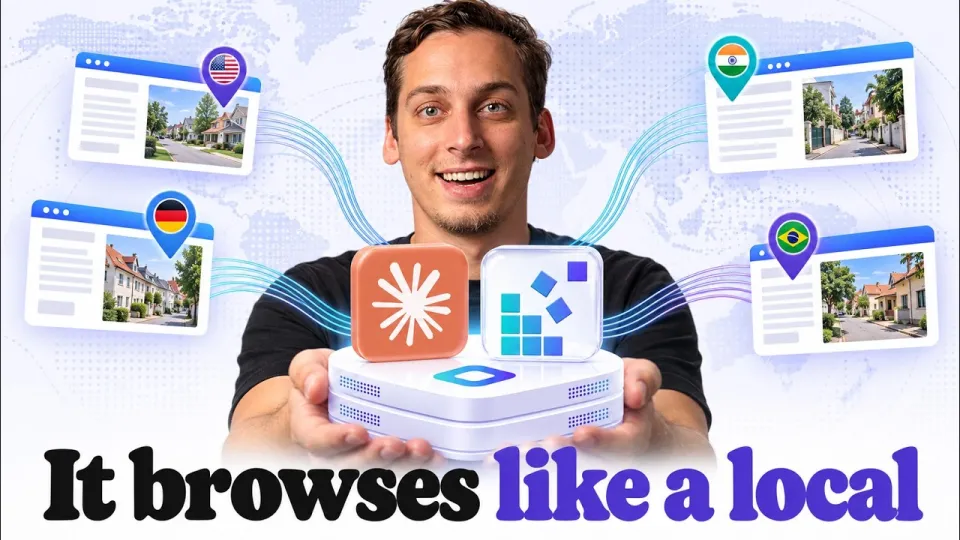
Video: This Claude Code Agent Uses Residential Proxies to Find Hidden Prices
VPNs vs Residential Proxies for Regional Pricing and Web Scraping
VPNs typically route all traffic through a single server in a data center, which websites can detect and block, especially when checking for geo-targeted pricing or content. Residential proxies avoid this by sending each request through a unique home ISP IP in the country of interest, making it appear as if a local customer is browsing. This method is crucial for uncovering hidden prices or offers that vary by region, such as Spotify’s subscription fees or Canva Pro pricing.
Rotating Residential Proxies and Country Targeting
Rotating proxies change the exit IP on every connection, providing a fresh, unflagged identity for each request. This is essential when scraping multiple pages or services to avoid detection. With residential proxies, users can target specific countries by selecting IPs within those regions, enabling precise geo-targeting without manual VPN switches. For example, the Claude Code agent demonstrated this by gathering pricing data from the US, Germany, Brazil, and India seamlessly.
Using Residential Proxies with AI Agents and Web Automation Tools
Combining residential proxies with AI-driven tools like Claude Code and automation frameworks such as Playwright allows efficient and scalable data collection from pricing pages and SaaS platforms. The agent can automatically open pricing pages through real home IPs, scrape data, and compile a comprehensive pricing teardown without manual intervention or VPN toggling. This integration is particularly valuable for businesses analyzing regional pricing, SaaS competitors, or template sellers adjusting their strategies.
Real-World Pricing Insights with Residential Proxies
The Claude Code agent revealed significant price differences for popular services: Spotify Premium costs about $12.99/month in the US but only $1.45/month in India; Canva Pro’s annual subscription is $144 in the US versus $42 in India. These disparities highlight the importance of residential proxies for accessing localized pricing and making informed decisions in competitive markets.
Common Questions and Challenges with Residential Proxies
Users often wonder about the cost, reliability, and legality of residential proxies. While they tend to be more expensive than data center proxies, services like DataImpulse provide robust networks that balance cost and performance. Residential proxies are legal when used ethically, such as for price comparison or SEO research. However, rotating proxies require proper management to prevent bans or CAPTCHAs during intensive scraping.
Useful Links
- DataImpulse residential proxies for web scraping and geo-targeting: https://dataimpulse.com/?utm_source=youtube&utm_medium=video&utm_campaign=lukasmargerie
- Claude Code AI agent: https://www.claude.com/product/claude-code
- Playwright automation framework: https://playwright.dev
Итог
Residential proxies offer a superior solution for accessing geo-targeted pricing and performing web scraping compared to VPNs and data center proxies. Their use of real home ISP IPs and rotating exit nodes makes detection difficult and ensures accurate local data collection. The Claude Code agent’s example, showcased on Lukas Margerie’s channel, demonstrates the practical benefits of residential proxies in revealing hidden prices across countries. For anyone looking to scrape or compare prices internationally, residential proxies from providers like DataImpulse are an essential tool. Explore their offerings to enhance your data scraping capabilities.
Key takeaways
- Residential proxies route traffic through real home ISPs, making them appear as local users.
- VPNs use data center IPs often flagged by websites, limiting access to localized content.
- Rotating residential proxies provide fresh IPs for each request, avoiding bans.
- Claude Code agent uses residential proxies to reveal hidden regional pricing on services like Spotify and Canva.
- DataImpulse offers reliable residential proxy networks for efficient web scraping and geo-targeting.
Source: This Claude Code Agent Uses Residential Proxies to Find Hidden Prices · Markdown version
Questions & answers
What is the main difference between a VPN and a residential proxy?
A VPN routes all your internet traffic through a single data center IP, which can be easily detected and blocked by websites. A residential proxy sends each request through real home ISP connections, making it appear as local traffic and reducing the chance of being flagged.
Why are residential proxies better for finding regional pricing?
Because they use real residential IP addresses from specific countries, websites show prices and content as if accessed by a local user, revealing hidden or regional pricing that VPNs or data center proxies often cannot access.
Are residential proxies legal to use for web scraping?
Yes, residential proxies are legal when used ethically, such as for market research, price comparison, or SEO. However, users must comply with website terms of service and avoid abusive scraping practices.
How do rotating residential proxies work and why are they important?
Rotating residential proxies assign a new IP address from their pool on each connection, which prevents websites from detecting repeated requests from the same IP, reducing the risk of bans or CAPTCHAs during scraping or automation tasks.